
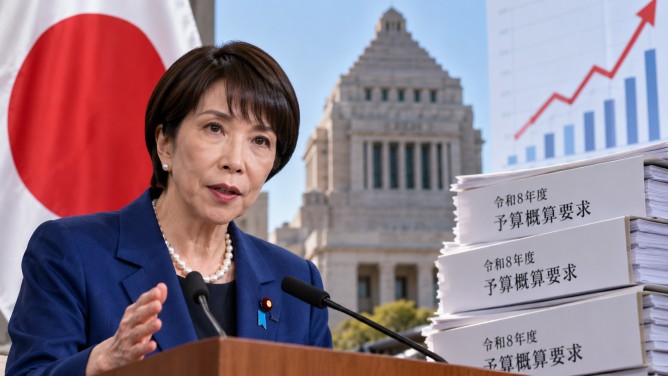
Japan’s government is preparing for a significant increase in spending for the next fiscal year, with budget requests from various agencies amounting to 143.1 trillion yen ($917.8 billion). This proposed budget approaches the high levels seen during the COVID-19 pandemic, reflecting Prime Minister Sanae Takaichi’s commitment to an expansionary fiscal policy. This policy emphasizes investment in strategic industries such as artificial intelligence, semiconductors, and economic security, signaling a focus on future growth and technological advancement.
Within this expansive budget, a notable portion of 12.2 trillion yen is earmarked for a new strategic investment program. Additionally, defense spending is likely to see an increase as the government reassesses its defense strategy, with several funding requests yet to have precise amounts allocated. This potential rise in defense expenditure underscores the government’s intent to bolster national security in an increasingly complex global environment.
However, these ambitious spending plans come at a time when rising borrowing costs are exerting pressure on Japan’s financial stability. The Finance Ministry has adjusted its assumed interest rate from 3.0% to 3.8%, prompted by a climb in the 10-year government bond yield to 3%, the highest rate since 1996. Consequently, the budget requests for debt-servicing costs, which include interest payments and debt redemption, have reached a record 36.64 trillion yen, marking an increase of 5.36 trillion yen from the current fiscal year.
As Japan navigates these financial challenges, the government’s approach to new government bond issuance will be closely scrutinized in the fiscal 2027 budget. Prime Minister Takaichi has expressed the intention to keep new bond issuance around 40 trillion yen while striving to lower the debt-to-GDP ratio, a critical measure of the country’s fiscal health. Balancing increased investment in growth sectors with fiscal discipline will be essential as higher interest rates elevate the cost of servicing Japan’s substantial public debt.