
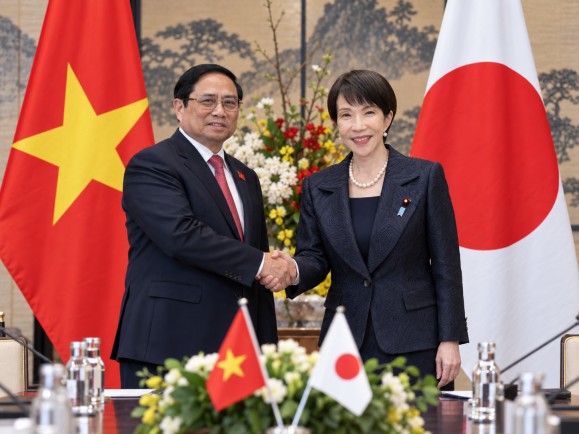
Vietnam is seeking to enhance its collaboration with Japan in the realm of strategic technologies such as semiconductors, artificial intelligence (AI), and renewable energy. This initiative also includes a call for increased support in workforce development. The proposal was a key topic of discussion during a meeting on September 3 between Vietnamese science and technology officials and a delegation from Japan’s House of Representatives. The talks centered around advancing semiconductor research, AI, energy technologies, and personnel training, while also fostering closer ties between businesses in these critical technological sectors.
Both countries are currently engaged in the NEXUS joint research program, which aims to co-fund semiconductor research. This collaboration encompasses chip design, advanced materials, supporting technologies, and manufacturing. Plans are underway to extend this partnership beyond 2027. Additionally, Vietnam is advocating for Japan’s support in developing sovereign AI capabilities and large language models tailored to the Vietnamese language. To this end, a joint Vietnam-Japan working group is scheduled to convene in October to promote technology transfer and fortify business connections in the semiconductor industry.
The Vietnamese delegation proposed expanding the NEXUS initiative into an annual cooperation mechanism. They suggested broadening research efforts to include AI, new materials, renewable energy, and biomedicine. The proposal also emphasized the importance of closer business partnerships and enhanced training for highly skilled engineers and experts in strategic technology fields.
Japan has shown interest in Vietnam’s semiconductor development and its labor policies, as well as in the country’s long-term energy strategy, which includes plans to expand nuclear power. Vietnam has outlined its pursuit of a diversified energy mix that incorporates conventional energy, renewables, and nuclear power, with ongoing research into small modular reactors. The Vietnamese government has communicated that its energy transition will necessitate substantial investment and a highly skilled workforce, expressing optimism that Japan will continue to be a pivotal partner in developing the necessary energy infrastructure to support its burgeoning high-tech industries.