
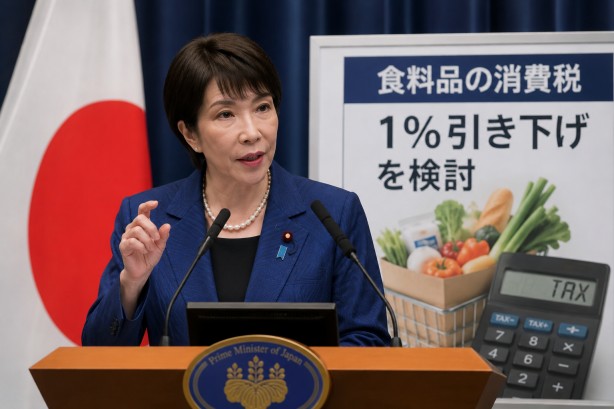
In a significant policy move, Japanese Prime Minister Sanae Takaichi is poised to direct the ruling Liberal Democratic Party to advance a plan that would see the consumption tax on food items dramatically reduced from 8% to 1%. This temporary tax reduction is slated to commence in April 2027 and continue for a two-year period, reflecting efforts to alleviate the financial burden on consumers.
The proposed tax cut emerges amidst a stalemate in cross-party discussions concerning tax reforms. The government, along with its ruling coalition partners, is advocating for the tax reduction as part of a broader initiative that includes cash assistance aimed at supporting low- and middle-income households. This financial aid package is expected to amount to approximately ¥600 billion, designed to further mitigate the rising cost of living faced by many Japanese families.
As the government seeks to navigate these fiscal challenges, the plan underscores its commitment to easing the economic pressures on citizens while maintaining a balanced approach to tax policy. The temporary nature of the tax cut reflects a strategic decision to provide immediate relief without permanently altering the country’s tax structure.
The government has set a timeline to finalize the policy by early August, with intentions to introduce the necessary legislative measures during an extraordinary parliamentary session later this year. This schedule aims to ensure that the tax reduction and accompanying financial support are implemented by the upcoming April, thus providing timely assistance to those in need.