
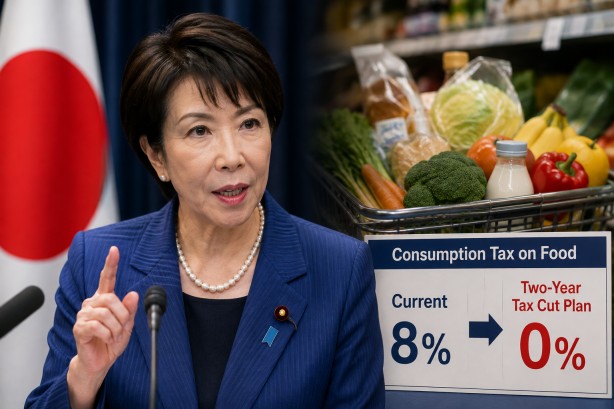
In a significant policy move, Japanese Prime Minister Sanae Takaichi has put forward a proposal aimed at slashing the consumption tax on food to nearly zero for a two-year period. This initiative, which seeks to alleviate financial strain on middle- and low-income families, is expected to be presented for Cabinet approval in the upcoming week, with hopes for parliamentary endorsement later in the year.
The plan outlines a reduction in the food tax rate from its current 8% to just 1% starting April 2027. To further cushion the financial impact, additional benefits linked to income will be introduced to address the remaining tax burden. Takaichi has emphasized that this temporary tax cut is designed to address the rising cost-of-living issues and has assured that the measure will conclude after the two-year timeframe.
Despite its potential benefits, the proposal has met with considerable opposition from within the ruling Liberal Democratic Party (LDP). Detractors have raised concerns about the hefty price tag of approximately ¥10 trillion ($62.25 billion) and the absence of a defined funding strategy to cover these costs. The challenge of reinstating the original tax rate after the temporary reduction period ends has also been a point of contention for fiscal conservatives who worry about long-term fiscal implications.
As discussions within the party continue, the proposal’s fate remains uncertain. Its potential to ease economic pressures for many households will likely be weighed against the financial burden it could place on government resources. The debate is expected to intensify as Takaichi pushes for the swift implementation of her plan, balancing socio-economic relief with fiscal responsibility.