
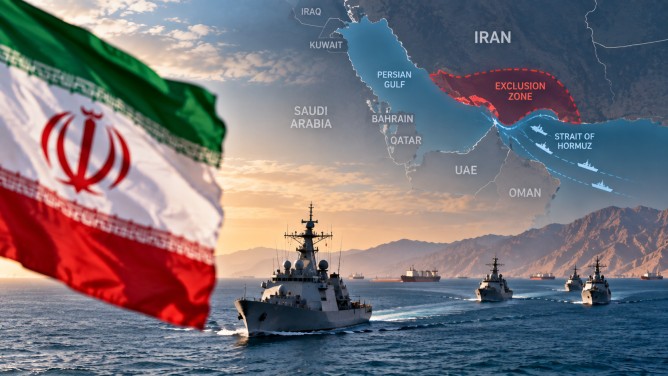
In a significant move, Iran has announced the creation of a new “exclusion zone” near the Strait of Hormuz, a vital maritime passage for global energy shipments. The initiative, led by Mohsen Rezaei, the newly appointed head of Iran’s Supreme National Security Council, aims to target vessels that Iran suspects of attempting to navigate through this strategically crucial waterway. This zone will stretch from the area adjacent to the U.S. naval blockade toward the Strait of Hormuz and into the Arabian Gulf. Rezaei noted that any vessels identified within this zone with the intent to traverse the strait could find themselves placed on Iran’s sanctions list.
The announcement comes amid escalating tensions, highlighted by recent military confrontations. Notably, a U.S. strike on three Iranian oil tankers followed Iran’s launch of ballistic missiles targeting U.S. warships. Additionally, Iran has declared that it successfully struck an unmanned U.S. vessel attempting to enter the strait, a claim that the U.S. military has firmly denied. The ongoing conflict underscores the Strait of Hormuz’s critical role in the global oil and gas supply chain, where disruptions have sparked concerns over potential impacts on energy prices and the broader global economy.
In response to these tensions, the United States has bolstered its naval presence to enforce a blockade of Iranian ports, aiming to curtail Tehran’s oil exports. This military strategy accompanies increased economic sanctions on Iran, a measure taken after the breakdown of diplomatic negotiations between Washington and Tehran. Despite these pressures, U.S. officials assert that a substantial volume of oil continues to flow through the Strait of Hormuz, facilitated by naval security and alternative regional pipelines.
While the diplomatic stalemate persists, Iran remains committed to pursuing dialogue, although Rezaei emphasized the need for stronger guarantees in any prospective agreement. The discussions between the two nations have stalled amid mutual accusations of treaty violations, further complicating the path toward a resolution. As both sides navigate these complex dynamics, the strategic and economic significance of the Strait of Hormuz remains at the forefront of international attention.