
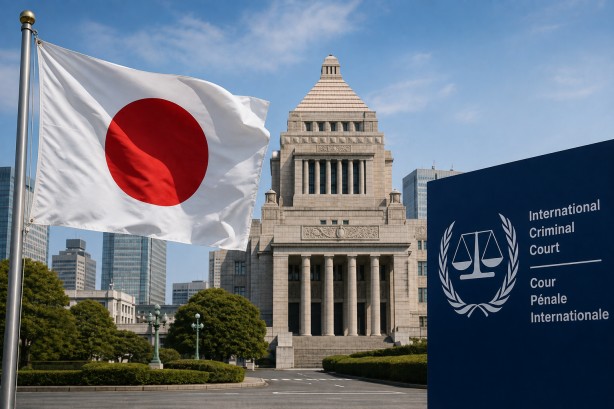
Japan is treading carefully following the United States’ decision to impose sanctions on Tomoko Akane, the president of the International Criminal Court (ICC). Prime Minister Sanae Takaichi referred to the move as “very unfortunate” and emphasized that Japan will continue discussions with the United States and other countries involved. The Japanese government is keen to avoid any negative repercussions on its relationship with the US, which remains its only treaty ally.
As the largest financial contributor to the ICC, Japan has been a significant supporter of the institution, also providing a considerable number of personnel. Tomoko Akane, who is Japanese and a former prosecutor in Japan, became an ICC judge in 2018 and was elected as the court’s president in 2024, marking her as the first Japanese individual to hold this prestigious position.
The US has adopted an increasingly adversarial stance toward the ICC. This was highlighted when President Donald Trump authorized sanctions against the court’s personnel in February 2025. US Secretary of State Marco Rubio further articulated this stance, noting Washington’s intent to weaken the ICC and rally allies against it.
Japan previously refrained from participating in an international statement condemning the US sanctions, citing its diplomatic ties with Washington as a reason for its reluctance. However, Akane later expressed her disapproval of Japan’s decision to abstain and called for a stronger stance in support of the ICC and the principles of the rule of law.
Despite its cautious public statements, Japan has shown support for Akane and the ICC in the past. During Akane’s visit to Japan in January, Prime Minister Takaichi reaffirmed Tokyo’s commitment to backing the court’s mission and role, illustrating Japan’s underlying support for the institution despite the diplomatic tightrope it is walking.