
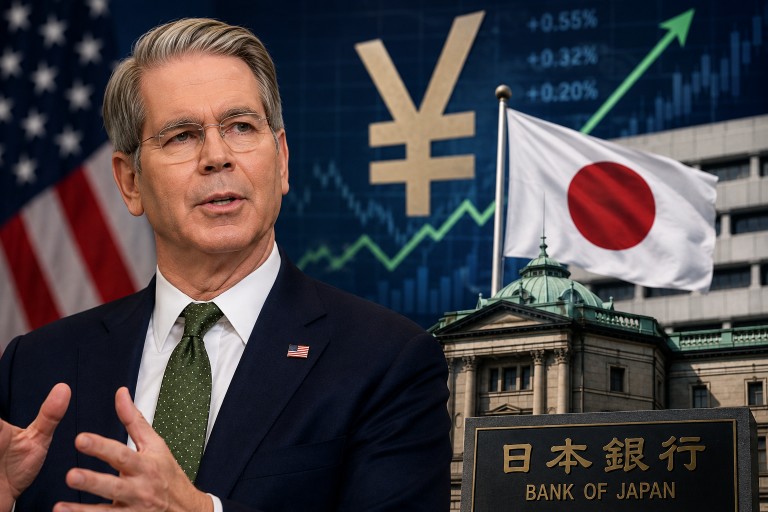
During a recent meeting with Bank of Japan (BOJ) Governor Kazuo Ueda, U.S. Treasury Secretary Scott Bessent offered strong backing for Japan’s initiatives to bolster the yen. This endorsement has increased market speculation that the BOJ might raise interest rates at its upcoming policy meeting on September 17-18. Bessent, who met Ueda on the sidelines of the G20 finance ministers and central bank governors’ summit in Asheville, North Carolina, highlighted the role of a weak yen in fueling inflationary pressures. He underscored the significance of prudent monetary policy and effective communication to stabilize inflation expectations and curb excessive currency fluctuations.
Anticipation is growing among investors for another potential rate hike by the BOJ, following its previous increase in June. Should the central bank decide to raise rates again in September, it could strengthen the perception that Japan is moving toward a more rapid pace of monetary tightening. This shift comes as Japan contends with rising borrowing costs, with the benchmark 10-year government bond yield recently surpassing 3% for the first time since 1996. This increase reflects expectations of more stringent monetary policy and concerns about the nation’s fiscal health.
Higher yields are also having a ripple effect on the government’s financial obligations, with the Finance Ministry estimating a significant rise in interest payments if borrowing costs remain high. At the same time, Japanese households are experiencing increased mortgage expenses, especially for fixed-rate loans. Nonetheless, the higher interest rates are also offering advantages to savers and financial institutions by enhancing returns on deposits and long-term investments.
The BOJ is thus navigating a challenging landscape, striving to support the yen and control inflation without imposing undue strain on households, businesses, and government finances. This delicate balancing act highlights the complexities of monetary policy in an environment characterized by fluctuating currency values and evolving economic conditions.