
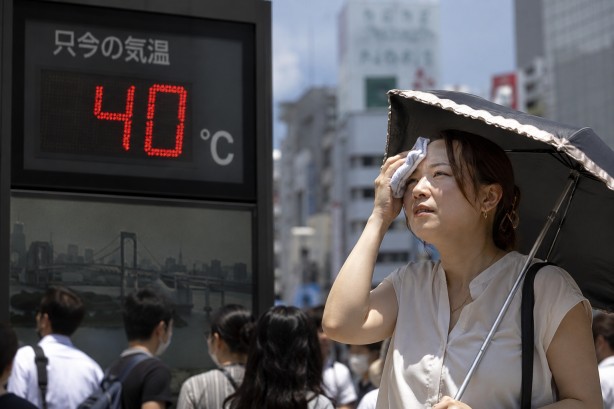
Japan grappled with intense heat on July 21 as a dominant high-pressure system elevated temperatures beyond 40°C in several regions, marking the ninth consecutive year of such extreme heat conditions. This surge in temperature was significant as it was the first instance since the term “kokushobi,” meaning “cruelly hot days,” was introduced in April to describe days reaching this degree of heat.
Tajimi, located in Gifu Prefecture, recorded the highest temperature of the day at 40.3°C. Similarly, Gujo, also in Gifu, saw temperatures rise to 40°C, while Toyota in Aichi Prefecture experienced 40.1°C. The widespread nature of the heatwave was underscored by the fact that 255 out of Japan’s 914 weather observation stations reported temperatures of at least 35°C by mid-afternoon, illustrating the extensive impact across both eastern and western parts of the country.
This severe weather prompted the Environment Ministry and Japan Meteorological Agency to issue heatstroke alerts for 42 prefectures, the highest number of alerts given this year. Authorities emphasized the importance of taking precautions, such as using air conditioning, staying hydrated, and maintaining salt levels, to mitigate the risk of heat-related health issues.