
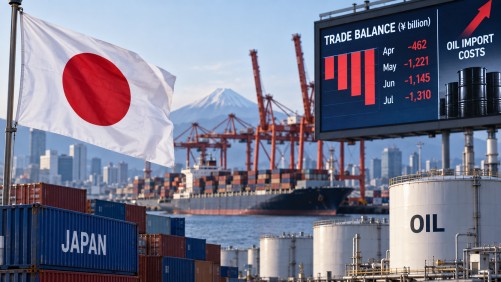
Japan’s economy is grappling with a sustained trade deficit, reaching approximately 1.1 trillion yen ($7 billion) in August, largely due to soaring oil prices that have driven up import costs. The ongoing trade shortfall, now in its fourth consecutive month, underscores the broader impact of global energy market disruptions on Japan’s import-dependent economy.
According to preliminary data from Japan’s Finance Ministry, the country’s imports surged by 28% compared to the same period last year, totaling 11.15 trillion yen ($71.9 billion). This increase is primarily attributed to heightened energy costs, which have been exacerbated by geopolitical tensions in the Middle East affecting oil supplies and shipping routes. Japan’s reliance on imported energy, particularly crude oil, has made it vulnerable to such fluctuations.
Despite the import challenges, Japan’s exports have shown resilience, climbing 19.3% year-on-year to reach 10 trillion yen ($64.5 billion). The growth in exports has been bolstered by robust sales of automobiles and computer chips. Notably, exports to the United States rose by 24.9%, while imports from the U.S. experienced a significant 55.2% increase, reflecting strong bilateral trade activity.
European markets also contributed to Japan’s export growth, with shipments to the region increasing by 11%. Conversely, imports from Europe rose by 20.4%, indicating a dynamic trade relationship. However, trade with the Middle East presented a different picture, with exports declining by 5.2% and imports decreasing by 4.2%, a reflection of the ongoing regional instability impacting commerce.
The economic strain from these developments highlights the challenges faced by Japan as it navigates the complexities of global trade and energy dependencies. With oil prices likely to remain volatile, Japan’s trade dynamics will continue to be closely monitored in the coming months.