
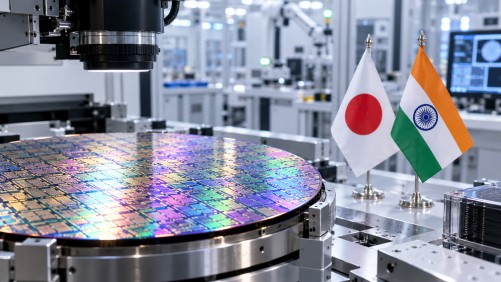
Japanese semiconductor companies are increasingly focusing on India as the country works to build a robust domestic chip manufacturing ecosystem. This move is part of a broader strategy to establish India as a global hub for semiconductors, spanning chip materials, design, manufacturing, packaging, and testing.
At the recent Semicon India 2026 event in New Delhi, over 30 Japanese companies participated, engaging with Indian counterparts to discuss potential investments, technology partnerships, supply chains, and research and development collaborations. This event underscores the growing interest and commitment from Japanese firms in India’s semiconductor ambitions.
Some Japanese companies have already begun forming strategic partnerships with Indian firms. Fujifilm is collaborating with Tata Electronics on advanced semiconductor materials, and Sumitomo Chemical is exploring cooperation on semiconductor material supply chains. Additionally, Enomoto is expected to contribute production technology support to the burgeoning industry.
Looking ahead, Tokyo Electron is planning to establish a training center in Gujarat by 2027, aimed at developing engineers skilled in semiconductor manufacturing equipment. This initiative highlights the recognition of India’s vast engineering talent pool, despite the current shortage of specialized semiconductor skills.
Industry officials believe that the increasing involvement of Japanese companies will play a crucial role in technology transfer, workforce development, and strengthening India’s semiconductor supply chain. As India continues to push for growth in this sector, these collaborations are seen as vital steps in supporting its long-term objectives.