
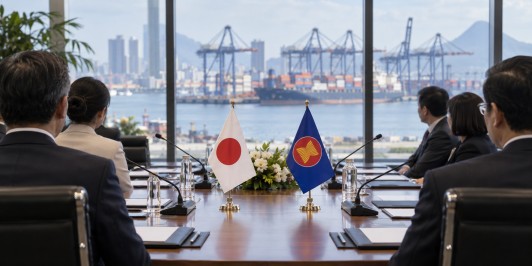
In a move set to bolster economic stability and technological advancement, Japan and the Association of Southeast Asian Nations (ASEAN) have initiated a study to expand their existing economic partnership agreement. This development, agreed upon during a meeting of economic ministers in Manila on September 20, focuses on enhancing supply-chain resilience, energy security, and the integration of artificial intelligence (AI) in their economies.
As global supply chains face increasing risks, the collaboration aims to ensure more robust and reliable systems between Japan and ASEAN member states. The partnership also emphasizes maintaining stable energy supplies, especially given the ongoing disruptions to crucial routes in the Middle East. Japan has reiterated its commitment to supporting ASEAN countries in strengthening their oil stockpiles, which is a critical step towards regional energy security.
The original economic partnership agreement, which came into effect in 2008, has already expanded to include services and investment. However, the current geopolitical tensions and global trade uncertainties necessitate a further update to meet modern challenges. The ministers underscored the importance of closer economic cooperation to navigate these complexities effectively.
In recent years, Japan and ASEAN have seen significant economic interactions, with their two-way merchandise trade recorded at $245.4 billion in 2025. Additionally, Japanese investment in ASEAN reached $9.5 billion, highlighting the importance of continued collaboration and mutual growth.
By focusing on these strategic areas, Japan and ASEAN aim to not only secure their economic futures but also position themselves as leaders in AI integration and energy resilience in the region. The study underway will determine the best ways to enhance their partnership, ensuring it is equipped to handle future economic challenges and opportunities.