
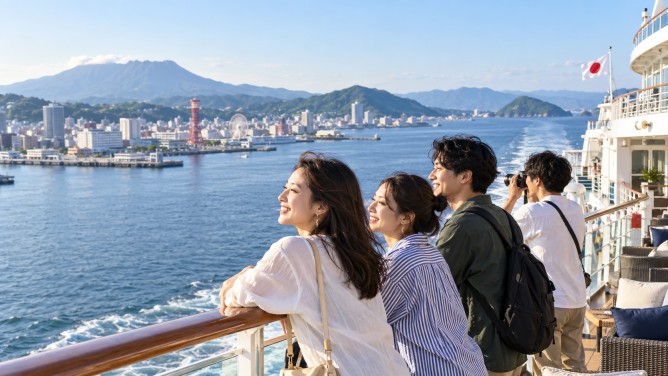
Japanese cruise operators are setting their sights on younger travelers by offering shorter, more affordable trips. This strategic move aims to broaden the appeal of cruise holidays in Japan, where high prices and lengthy vacation requirements have traditionally deterred many potential customers. Leading this initiative is MOL Cruises, which recently introduced the Mitsui Ocean Sakura, a cruise ship designed for domestic itineraries lasting one to three nights.
The effort is part of a broader industry trend to expand the customer base and make cruise travel more accessible. Japan’s Ministry of Land, Infrastructure, Transport and Tourism has set an ambitious goal to increase the number of Japanese cruise travelers to one million by 2030. Shorter cruises are seen as an effective way to achieve this target by attracting individuals who seek a taste of cruise life without the commitment of an extended voyage.
Other companies are also investing in this burgeoning sector. NYK Cruises launched the Asuka III in July 2025, adding to the fleet of shorter domestic cruise offerings. Additionally, Oriental Land, the operator of Tokyo Disneyland, plans to introduce Disney-themed cruises in Japan by fiscal 2028. These cruises will range from two to four nights and will feature entertainment with popular Disney characters, departing from ports in the Tokyo metropolitan area.
Industry experts suggest that these shorter domestic cruises could have the added benefit of boosting regional tourism. By bringing visitors to destinations with limited transport connections and accommodation options, cruises could support local economic development and create new opportunities for tourism-related businesses.
The push towards shorter cruise trips reflects a strategic adjustment within Japan’s cruise industry, aiming to cater to changing consumer preferences and tap into a market of younger travelers eager for new experiences. As the industry evolves, these developments are expected to not only attract more passengers but also contribute significantly to regional tourism growth.